 TIC TAC · FLIR1 [DOW · IR SENSOR]
WATCH IN UMBRA — PURSUE sensor footage, native playback
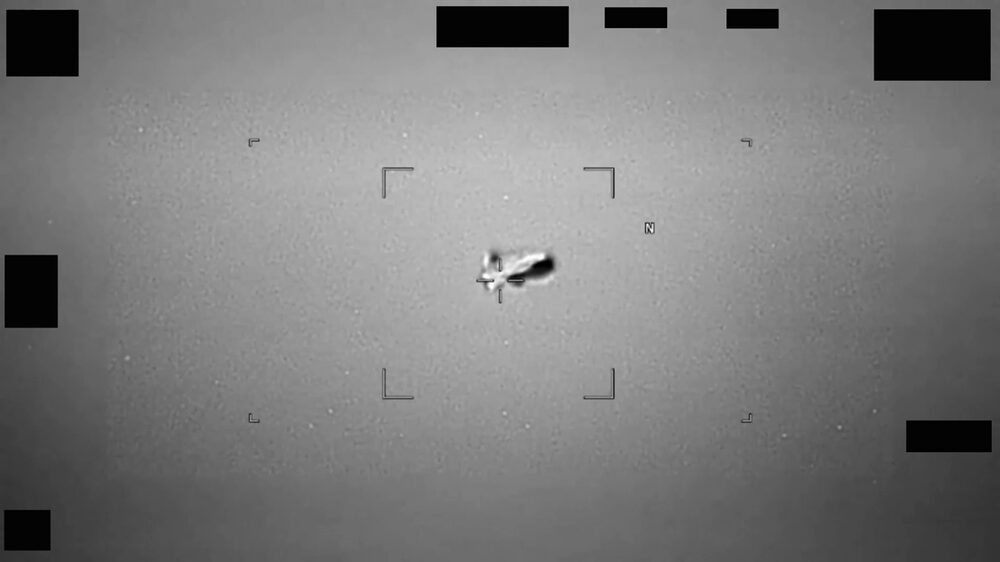
TIC TAC · FLIR1 [DOW · IR SENSOR]
WATCH IN UMBRA — PURSUE sensor footage, native playback
THE 2004 NIMITZ ENCOUNTER
Over several days in mid-November 2004, the cruiser USS Princeton tracked unknown objects on radar descending from roughly 80,000 feet and holding near the ocean surface. On November 14, Commander David Fravor and Lieutenant Commander Alex Dietrich were vectored from the Nimitz to investigate. They reported a smooth, white, Tic-Tac-shaped object about 40 feet long — no wings, no rotors, no visible exhaust — moving erratically above a churning patch of sea, then accelerating out of sight in an instant. It remains one of the most thoroughly witnessed UAP events on record, corroborated by multiple aircrew and several independent sensor systems.
THE FLIR1 VIDEO
A short time later, another F/A-18 Super Hornet captured infrared footage of a similar object through its ATFLIR targeting pod — the clip now known as FLIR1, or the Nimitz video. The Department of Defense formally acknowledged and released FLIR1, along with the Gimbal and GoFast clips, in April 2020, confirming the footage is authentic and that the objects remain "unidentified." The encounter was examined by the Navy, the UAP Task Force, and now the All-domain Anomaly Resolution Office (AARO), which has not reached a conclusion about what the object was.
WHERE IT SITS IN THE RECORD
Infrared and electro-optical footage of this kind — captured by military sensors and assessed without sensational claims — is exactly the category that forms the Department of War collection in the PURSUE release: sensor video from CENTCOM, INDOPACOM, and EUCOM, carried with AARO's neutral framing. The Tic Tac is the public reference point for that whole class of footage. Umbra renders the military sensor record natively on iPhone, so you can read the reports and watch the clips on the record rather than re-compressed through a social feed.
> The Navy's most famous UAP encounter — and the footage that followed — read in context, on your iPhone.